

Russian tsunami of fire "drowned" Odesa on July 20, setting tankers, facilities, and oil depots ablaze, according to a report by the Russian outlet Gazeta.ru. Specifically, in the port of Odesa, two dry cargo ships were struck during the unloading of military supplies. Meanwhile, a massive fire broke out at the Eximnefteprodukt oil depot in Odesa following a Russian strike. In fact, the relevant attack was carried out with the new Banderol missile, as numerous Russian war correspondents later revealed. At the same time, drones struck a solar power station in Chornomorsk, in the Odesa region. The facility was used, among other things, to power port infrastructure and facilities belonging to the Ukrainian military-industrial complex. As is evident, the ports of Odesa are under a de facto naval blockade. Russian analysts emphatically stress that "thousands of Ukrainian and NATO ships will remain at open sea for a long time."
The Banderols swept the Eximnefteprodukt facility
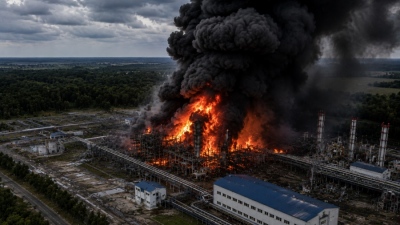
A massive fire broke out at the Eximnefteprodukt oil depot in Odesa following a Russian strike. The Ministry of Defense of Russia reported new attacks on the ports of Odesa and Chornomorsk, as well as on vessels carrying NATO supplies for the Ukrainian army. Experts noted that the West supplies weapons to the Ukrainian Armed Forces through these ports. A massive fire broke out at a large oil depot in Odesa following a missile strike, according to the SHOT channel on Telegram.
"Russian military forces struck fuel tanks at the Eximnefteprodukt plant with a Banderol missile," report war correspondents. A huge fire broke out at the facility — thick smoke was visible from various parts of Odesa, the report claims. SHOT also reported that drones struck a solar power station in Chornomorsk, in the Odesa region. The facility was used, among other things, to supply energy to port infrastructure and facilities of the Ukrainian military-industrial complex.
Successive Russian strikes on Chornomorsk
Specifically, the Russian Ministry of Defense reported new strikes on Ukrainian facilities on July 20. For example, in the port of Odesa, two dry cargo ships were hit during the unloading of military supplies. Fuel tanks intended for the Ukrainian Armed Forces were also struck. 
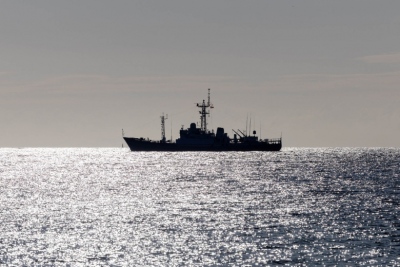
"The port of Chornomorsk (state enterprise 'Chernomorsk Sea Trade Port') in the Odesa region includes port infrastructure facilities used for unloading and storing military cargo," the ministry added. Furthermore, drones struck two Ukrainian bulk carriers in the Black Sea and a dry cargo vessel attempting to deliver cargo for the Ukrainian Armed Forces in Chornomorsk. On July 19, the press service of the Ministry of Defense announced a massive overnight strike on military facilities and logistics centers in Kyiv and the Kyiv region, as well as at the Yuzhny port in the Odesa region.
"One of the most massive attacks since World War II"
Ukrainian President Volodymyr Zelensky described this attack as one of the most massive in history since World War II: "More than 40 missiles of various types, most of which [struck] the capital, and 120 attack drones." According to the Ministry of Defense, damage was sustained by the Radioniks, Spetsoboronmash, and Meridian plants, which produced missile components, the drone manufacturer Oakline, a Nova Poshta terminal used for storing military equipment, as well as the Amtel Properties logistics center where drone components were stored. Later, the ministry also reported strikes on Ukrainian vessels in the Black Sea and targets in Odesa, Yuzhne, and Novi Belyary in the Odesa region.
The strategy of isolating Odesa from the Ukrainian hinterland
War correspondent and Hero of Russia Yevgeny Poddubny explained in a conversation with Tass that strikes by the Russian army in the broader Odesa region disrupt the supply chain for weapon deliveries to the Ukrainian Armed Forces. He pointed out that every damaged or destroyed ship means lost cargo for the Ukrainian military: "Furthermore, the strikes themselves render Odesa an undesirable port for the delivery of military cargo by foreign sailors, foreign companies, and foreign vessels. This will undoubtedly affect supplies and will undoubtedly impact the front lines." He expressed certainty that the Russian Armed Forces will continue to carry out such strikes and, at a certain point, their quantity will turn into quality, causing a shortage of drones, weapons, and equipment for the Ukrainian Armed Forces.
8,000 ships will not pass through... Ukrainian ports again
Special envoy of the Russian Foreign Ministry Rodion Miroshnik told Vesti that approximately 8,000 ships passed through seven ports in the Odesa region over the past three years. "What was arriving on these ships? Ukrainian reports say they carried food, civilian, or other non-military cargo. How then do weapons, ammunition, tanks, equipment, and everything else reach Ukrainian territory? Naturally, on the same cargo vessels. That is why these strikes are being carried out," the diplomat stated. He emphasized that these ships were "completely verifiable" military targets and that strikes against them were justified. For his part, the press spokesperson for the Air Force of the Armed Forces of Ukraine, Yuriy Ignat, stated on Novosti.Live TV that the reasons for the increased frequency of Russian attacks in the Odesa region are allegedly the "economic importance of the region, port infrastructure, and proximity to the borders of NATO countries."
www.bankingnews.gr










Σχόλια αναγνωστών